Long Game, Short Clips: Why Action Sports Are Eating YouTube Alive While TikTok Just Steals the Highlights
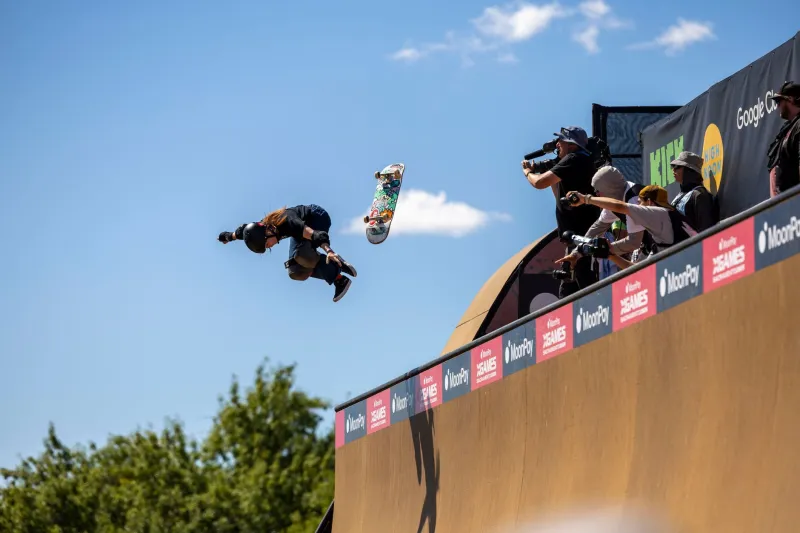
There's a moment in almost every great skate video — usually somewhere around the four-minute mark — where the music locks in, the skating gets stupid good, and you forget you're sitting on your couch. You're in it. You're feeling the concrete, the speed, the consequence. That feeling doesn't exist in fifteen seconds. It can't. And that's exactly why action sports are doing something most other content categories would kill for: they're building real, loyal, long-form audiences on YouTube while TikTok quietly strips their clips and pretends it invented the culture.
This isn't a hot take. It's a pattern that's been building for a couple of years now, and if you've been paying attention to what's happening with independent skate and surf channels, you already know where this is going.
The Physics of the Problem
Here's the thing about surfing and skateboarding that nobody in a content strategy meeting fully understands: the sport itself resists compression. A wave doesn't peak on cue. A trick attempt doesn't resolve in the time it takes to swipe up. The buildup — the skater rolling back to the spot, chalking the board, visualizing, bailing twice, landing on the third — that's not filler. That's the whole story.
Short-form platforms are built around instant payoff. Drop the hook in the first second, deliver the money shot, loop it. But action sports footage doesn't loop. It builds. A thirty-second clip of someone landing a gnarly rail trick looks sick, sure. But without the context — the spot, the crew, the number of tries, the blood on the pavement two attempts earlier — it's just a GIF. It means nothing.
Long-form YouTube is where that context lives. And creators who understand that are absolutely running with it.
The Creators Who Figured It Out First
Independent YouTube channels in the skate and surf space have quietly become some of the most engaged communities on the entire platform. We're talking about channels that post full skate parts, raw surf sessions with minimal editing, spot-hunting vlogs, and deep-dive interviews with riders who've never had a Red Bull sponsorship. These aren't viral hits. They're appointment viewing for people who actually give a damn about the culture.
What makes them work isn't production value — some of the best-performing skate content out there is shot on a $400 camera by someone's homie. What makes them work is authenticity and duration. Viewers stick around because the video earns their time. It gives them something a highlight reel never could: a reason to care about the person doing the skating, not just the trick.
The comment sections on these videos read like local skate park conversations. People know the spots. They recognize the riders. They argue about whether the line at the 6:42 mark was harder than it looked. That's a community. TikTok comments are a different animal entirely — mostly reactions, mostly strangers, mostly gone by tomorrow.
TikTok's Dirty Little Secret
Here's where it gets a little frustrating if you're one of these independent creators. TikTok's action sports ecosystem is largely built on stolen content. Clips from YouTube videos, Instagram posts, and full skate parts get ripped, reposted without credit, and then rack up hundreds of thousands of views for accounts that had nothing to do with making the thing. The algorithm rewards the repost just as much — sometimes more — than the original.
Surf clips are especially vulnerable to this. A beautiful barrel at some California or Hawaii break, originally posted by the surfer themselves or a crew filming a full session, ends up on seventeen different TikTok accounts with trending audio slapped over it. The person who paddled out, got worked, and finally threaded that tube? They might get a fraction of the reach that the account who stole it gets.
Instagram Reels does the same thing, just with a slightly older demographic doing the swiping.
It's not a new problem — content theft is older than the internet — but the scale of it in action sports is wild. And the platforms have been slow to do anything meaningful about it because, frankly, the stolen content keeps people scrolling, which is all the algorithm actually cares about.
Why YouTube Still Wins for the Long Haul
Despite all the noise around short-form, YouTube remains the most valuable platform for action sports creators who are serious about building something that lasts. The reasons are pretty straightforward.
First, discoverability on YouTube is cumulative. A video you posted two years ago can still be surfaced to new viewers through search and recommendations. On TikTok, content has a shelf life of about 72 hours before it disappears into the void. For skate and surf creators who are building a body of work — a catalog of sessions, a documented progression, a visual record of a crew's history — YouTube is the only platform that actually preserves that.
Second, monetization on YouTube is more creator-friendly at the long-form level. A twelve-minute skate video generates more ad revenue than a dozen TikTok clips, and YouTube's audience retention data helps creators understand exactly when they're losing viewers and why. That feedback loop makes better content over time.
Third — and this is the one that matters most — YouTube subscribers actually come back. The subscription model means that when a creator drops a new video, there's a built-in audience waiting for it. That's not guaranteed on TikTok, where the algorithm decides who sees what regardless of whether you hit the follow button.
The Trend Trap
One of the more insidious things TikTok does to action sports content is pressure creators to chase trends that have nothing to do with the sport. Sound familiar? It should — it's the same pressure that commercial sponsors have always put on athletes to perform for a mainstream audience instead of their core one.
Skate and surf creators who lean into TikTok trends often end up making content that doesn't feel like them. The platform rewards novelty over craft, and the result is a lot of skateboarding videos where the skating is almost beside the point. The hook is the trend. The sport is just the backdrop.
Creators who've resisted that pressure and stayed focused on making genuine skateboarding and surfing content for YouTube are the ones who've built the audiences that actually convert — the ones who buy the merch, support the Patreons, and show up to the events.
What This Means Going Forward
Nobody's saying TikTok doesn't matter. Short-form is a real part of the ecosystem, and plenty of action sports athletes have used it as a top-of-funnel tool to drive people toward their longer content. That's a legitimate strategy when you control the clip and use the platform intentionally.
But the idea that action sports content needs to adapt itself to fit the 15-second format to stay relevant? That's backwards. The culture has always moved on its own timeline. A full skate part takes months to film and edit. A surf trip builds over days of sessions. The story is the journey, not the landing.
The algorithm doesn't know how to film a line through a crusty LA bank spot or a late-afternoon swell at a reef break in San Diego. It never will. And the creators who understand that — the ones grinding out real content for audiences who actually skate and surf and live this stuff — are the ones who are going to be here in ten years while the trending sounds have long since changed.