Hallowed Ground: Why Certain Spots Become the Soul of Action Sports
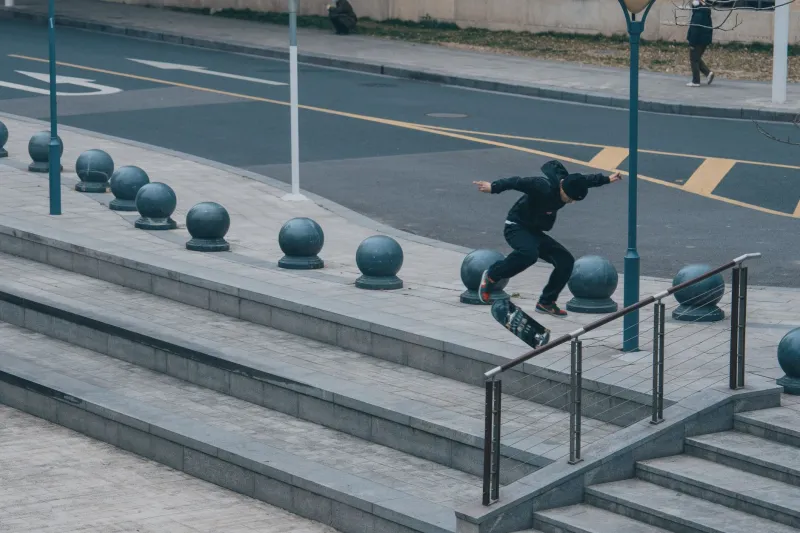
Every skater knows a set of stairs that feels mythic. Every surfer has paddled out at a break that carries weight before a single wave rolls through. But how does a patch of concrete or a stretch of coastline cross the line from just a spot into something almost sacred? It doesn't happen overnight, and it doesn't happen by accident.
Legendary spots are built — slowly, collectively, and usually without anyone trying.
The Making of a Myth
Take Hubba Hideout in San Francisco. For years, that marble ledge at the base of a government building wasn't anything more than a functional piece of urban architecture. Then skaters started hitting it. Footage spread. Names got attached to tricks. And somewhere in the middle of all that, the spot stopped being just a ledge and started being a statement about what skateboarding could look like on real streets.
The same thing happens in surfing. Mavericks, the big-wave break off Half Moon Bay in Northern California, wasn't on anyone's radar until a handful of surfers started quietly charging it in the late '80s. The secrecy was deliberate. The locals who knew about it weren't gatekeeping out of selfishness — they were protecting something fragile. Once the cameras showed up and the contests got organized, that quiet, almost personal relationship with the break shifted into something else entirely.
That shift is at the heart of what makes legendary spots so complicated.
What Locals Actually Know
Marcus Reyes has been skating the same downtown plaza in San Diego for going on fifteen years. He watched it go from a ghost town at 7 a.m. on weekends to a destination spot after a local pro filmed a part there that blew up online.
"It changed the whole vibe," he says. "Not in a bad way at first. More people skating means more energy, more ideas. But then you start getting kids who don't know the unwritten stuff. Don't skate when the security guard is on his break. Don't leave wax everywhere. Don't bring a whole crew and blast music at 6 in the morning when people live nearby. That stuff matters if you want the spot to last."
The unwritten rules aren't posted anywhere, obviously. They live in the culture — passed down through observation, through older skaters pulling newer ones aside, through the kind of social education that only happens when you're actually present and paying attention. When a spot blows up and draws people who bypassed that process entirely, the rules start to erode.
Surf breaks have their own version of this. Localism gets a bad reputation, and some of it is earned — aggression in the water has no place in the lineup. But the underlying instinct, the desire to protect a break from being overwhelmed and degraded, isn't irrational. It's a response to a real problem.
The Discovery Problem
Social media has fundamentally changed the timeline on how spots get found. What used to take years of word-of-mouth and grainy VHS footage now takes one viral clip. A surf photographer posts a single image from a remote point break in Oregon, and within a season, people are driving up from California to surf it.
Jenna Wills, a longboarder who grew up surfing the Pacific Northwest coast, describes watching this happen to a break she'd surfed with maybe a dozen people for most of her life.
"It wasn't that I thought I owned it," she says. "I knew I didn't. But there's a whole ecosystem around a surf spot — the parking situation, the paddle out, the way people communicate in the water. When you triple the crowd overnight, all of that gets stress-tested. Some of it holds. Some of it doesn't."
What gets lost in the accessibility-versus-preservation debate is that the two sides aren't always as opposed as they seem. More people experiencing action sports is genuinely good. More people falling in love with skating and surfing means more pressure on cities to build parks, more advocacy for coastal access, more cultural weight behind the whole thing. The issue isn't the people — it's the speed.
Why the Spot Means More Than the Trick
There's a reason skaters still make pilgrimages to spots that have been skated thousands of times, spots where the ledge is chipped and the ground is rough and a security guard shows up every forty-five minutes. It's not just about the skating. It's about connecting to a lineage.
When you drop into the bowl at Burnside in Portland, you're not just skating concrete — you're skating something that the community literally built themselves, poured themselves, defended themselves. The spot carries that history in every crack. The same goes for surfing a break where you know the names of the people who shaped how it gets ridden, where the etiquette was developed through decades of people figuring it out together.
That's what makes a spot sacred. Not the trick that got filmed there. Not the contest that put it on the map. The accumulated weight of everyone who showed up, learned the unwritten rules, added something to the culture, and passed it forward.
Holding On Without Holding Out
So what do you do when your spot starts to change? The instinct to close ranks is understandable but usually counterproductive. The better move, according to most of the long-timers we talked to, is to be the person who teaches.
Bring newer skaters into the culture actively. Explain the unwritten rules out loud instead of expecting people to absorb them by osmosis. In the water, be the surfer who models good lineup behavior instead of the one who intimidates. The spots that last — the ones that stay healthy and rideable and culturally alive — are almost always the ones where the locals chose education over exclusion.
The spot doesn't belong to the people who found it first. It belongs to everyone who takes care of it.
And right now, more than ever, that's a job that needs more hands.