Eat Pavement, Get Better: The Surprising Science of Learning Through Your Worst Slams

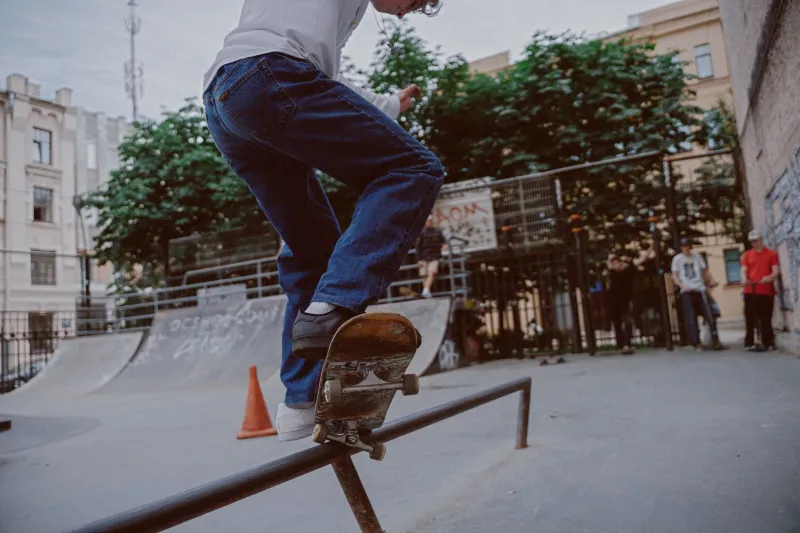
Photo by Photo by Kevin Schmid on Unsplash on Unsplash
You know the fall. The one that plays back in your head in slow motion for days afterward. Maybe it was a rail attempt that went sideways. Maybe it was a sketchy landing on a gap you had no business hitting yet. Whatever it was, you got back up, brushed the gravel out of your palm, and probably thought something like: why do I do this to myself?
Here's the answer, and it's a better one than you might expect: because that fall just taught you something no coach, tutorial, or training montage could. The slam is the lesson. You just have to know how to read it.
Pain Is Data (If You're Paying Attention)
Most skaters treat crashes as interruptions — something to survive and move past as quickly as possible. But sports psychologists and movement coaches who work with action sports athletes describe falls very differently. To them, a wipeout is a feedback event, one of the richest sources of real-time information a skater can get.
Dr. Alicia Moreno, a sports psychologist based in San Diego who works with surfers and skaters, explains it this way: "Your body knows exactly what went wrong before your conscious mind does. The direction you fell, the part of your body that took impact first, the moment in the trick where control slipped — all of that is information encoded in the experience. The athletes who progress fastest are the ones who treat every fall like film study."
That's not just motivational talk. There's actual biomechanical logic behind it. The way your body fails — whether you're pitching forward off a board, sliding out on a turn, or catching a heel edge — reflects a specific breakdown in the movement pattern you were attempting. If you can identify that breakdown instead of just shaking it off, you can target exactly what needs to change.
The Three-Second Window You're Probably Wasting
Here's something most skaters never think about: the three seconds immediately after a fall are arguably the most important learning opportunity in the entire session, and almost everyone blows it.
Typically, the post-slam sequence goes: impact, pain assessment, embarrassment check (did anyone see that?), get up, shake it off, try again. What's missing from that sequence is the one thing that actually accelerates progression — a quick mental replay while the sensation is still fresh.
Coach Darnell Okafor, who runs a youth skate development program in Chicago, drills this habit into every athlete he works with. "I tell them: before you stand up, give yourself three seconds to feel what just happened. Not to feel bad about it — to feel it. Where were your feet? Where was your weight? What was the last thing you controlled and the first thing you lost?" he says. "Most kids start doing this automatically within a few weeks, and the improvement in their consistency is pretty dramatic."
It sounds almost too simple, but the science backs it up. Proprioceptive memory — your body's sense of its own position and movement — is at its sharpest immediately after a physical event. Waiting until you get home to analyze a slam means you're working with a much fuzzier version of what actually went down.
Your Body Is Already Trying to Protect You (And That's Part of the Problem)
After a bad fall, something interesting happens in your nervous system. Your brain files the experience under threat and starts building in protective responses — hesitation, muscle tension, altered timing — designed to keep you from repeating it. This is useful when you're dealing with genuinely dangerous situations. In skateboarding, it's often the thing that keeps you stuck.
The flinch. The half-committed approach. The trick that suddenly feels impossible even though you were landing it consistently before the slam. These aren't signs of weakness — they're your nervous system doing exactly what it's designed to do. The challenge is working with that response instead of against it.
Jamie Caldwell, a physical therapist in Austin who specializes in action sports recovery, sees this constantly. "Athletes come in frustrated because they can't figure out why they've mentally blocked on a trick they had dialed. What's actually happening is a really normal neurological response to a pain event," she says. "The way through it isn't to white-knuckle past the fear — it's to systematically rebuild confidence through progressive exposure. Start smaller. Rebuild the pattern. Let your nervous system update its threat assessment."
That means going back to a lower-stakes version of whatever you were attempting. Not because you can't handle the real thing, but because your brain needs evidence that the pattern is safe before it'll stop hitting the brakes on you.
Reading the Fall: A Practical Field Guide
So how do you actually turn a slam into actionable feedback? Here's a rough framework that coaches across disciplines tend to use:
Forward falls — pitching over your board on a landing or trick attempt — usually signal that your weight was too far forward or your landing leg buckled at the knee. Focus on absorbing impact through bent knees and keeping your chest upright.
Backward falls — sitting down hard or catching air going back — often mean you were leaning away from the trick, either from hesitation or incorrect foot placement. Check where your back foot is positioned relative to the tail.
Slide-outs — feet shooting out from under you — typically come down to surface conditions, wax, or speed management. But they can also indicate that your center of gravity was too high. Get lower before you commit.
The almost-land — you had it and then lost it — is usually about commitment. Either you pulled out too early or your weight shifted on landing. This is the fall that's easiest to fix because the trick is already mostly there.
The Mental Bounce-Back Is Half the Battle
Progression in skateboarding — or any action sport — isn't a straight line. It's a jagged, frustrating, occasionally painful climb with plateaus and dropbacks built in. The athletes who make it through those rough patches aren't the ones who fall the least. They're the ones who've gotten genuinely comfortable with falling.
That comfort doesn't come from being reckless. It comes from trusting the process — knowing that every slam is part of the feedback loop, that pain is temporary, and that the information inside the wipeout is worth more than the wipeout costs.
So next time you eat concrete, give yourself those three seconds. Feel what happened. Let your body tell you what it learned. Then get up, wax the board, and go again.
The pavement is a hard teacher. But it's never wrong.