Ride or Die, For Real: Why Your Local Crew Is the Only Safety Net That Actually Matters
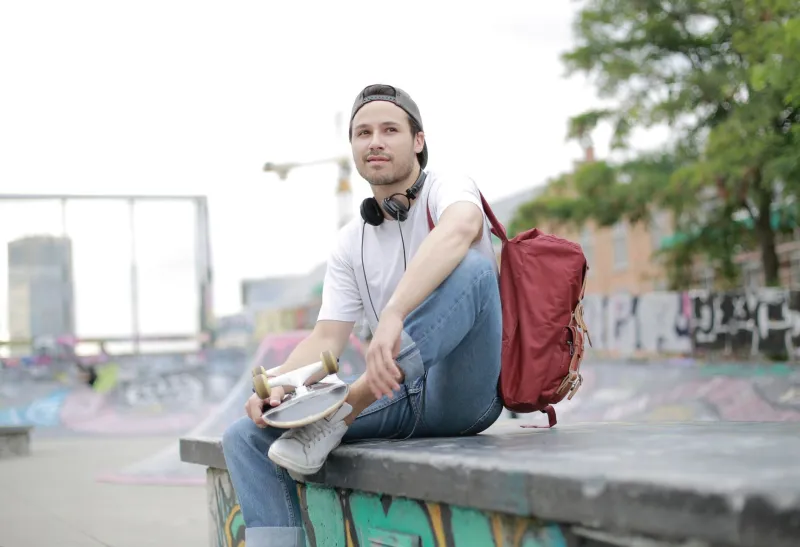
There's a moment every surfer or skater hits eventually — the one where something goes genuinely sideways. Maybe it's a hold-down that lasts two waves too long. Maybe it's a bad slam that leaves you dazed on the concrete with your board in three pieces and your knee questioning every decision you've ever made. In that moment, you don't reach for your phone to check your follower count. You look up. And if you're lucky, someone's already moving toward you.
That someone is your crew. And if you don't have one, that's the most important problem in your action sports life right now.
The Difference Between Clout and Community
Let's be straight about something. Having 10,000 Instagram followers who double-tap your clips is not a community. It's an audience. Audiences watch. Communities act. And in action sports — where the stakes are physical, the conditions are unpredictable, and the culture is constantly under threat from outside forces — the difference between those two things is everything.
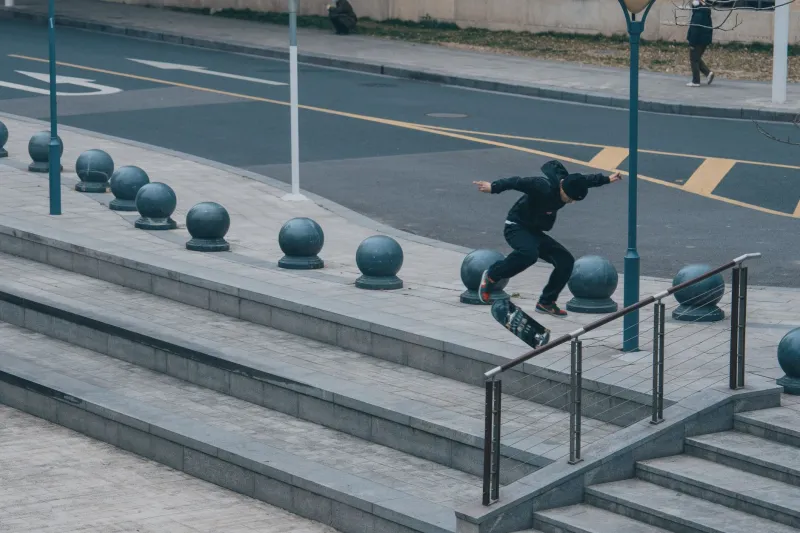
Real crews are built on repetition and proximity. They're the people who show up at the same spot, session after session, season after season. They know which rock at your local break goes exposed at low tide. They know which section of the park gets icy in January and which ledge has a crack that'll send you flying if you catch it wrong. That knowledge doesn't live on a YouTube channel. It lives in the people who've been putting in hours at that spot since before you showed up.
And that informal knowledge? It saves lives. Literally.
When the Crew Becomes a Search Party
Ask around at any well-established surf break in California, Hawaii, or along the Gulf Coast and you'll find stories — not the kind that make the news, but the kind that get passed around in parking lots and over post-session tacos. Stories about a guy who got pinned under a board in a rip and it was two regulars who spotted it and got to him before the lifeguard even turned around. Stories about a skater who took a gnarly head shot at the local park and it was the older heads in the crew who kept him calm, kept him still, and called the right people.
These aren't dramatic rescues born from some formal training program. They're the natural result of people who genuinely know each other operating in a space they've shared for years. When you know someone's swimming ability, their risk threshold, their usual routes — you notice when something's off. That's not surveillance. That's community.
Coastal towns up and down the East Coast have seen this play out especially during storm swells, when inexperienced surfers paddle out chasing the hype and local crews end up running de facto water safety operations from the beach. Nobody asked them to. Nobody pays them. They just do it because that's what you do when you actually belong to a place.
Spot Justice Isn't Online — It's Organized
Here's another thing your followers can't do: show up in person when a developer tries to bulldoze your favorite park or a municipality slaps a no-surfing ordinance on your home break.
Across the US, action sports spots have been under sustained pressure from corporate development, municipal overcrowding, and liability-obsessed local governments for decades. And the spots that have survived — the ones that fought back and won — almost always had an organized local crew behind them.
Think about the community-led campaigns that have kept beloved skateparks open in cities from Portland to Atlanta. Or the surfer collectives along the California coast that have shown up to city council meetings, organized beach cleanups to build goodwill, and created the kind of civic presence that makes elected officials think twice before signing off on a development that would wreck a break. None of that happens organically online. It happens because people who share a spot also share a stake in protecting it.
A tight crew creates accountability in both directions. You hold down the spot. The spot holds you up.
The Mentorship Algorithm Can't Replicate
You can watch a thousand tutorial videos and still not know how to read a lineup. You can follow every elite skater on social media and still not understand how to approach a new spot without looking like you've never left your driveway. The stuff that actually levels you up — the real, usable, hard-won knowledge — comes from people who are willing to spend time with you in the actual space where the sport lives.
That's mentorship, and it's the quiet engine powering every thriving action sports scene in America.
It looks like the older surfer who paddles over and tells you, without being asked, that you're sitting twenty feet too far inside for this swell direction. It looks like the skater who's been sessioning a particular ledge for five years watching a newcomer struggle with an approach and just casually demonstrating the right line — not to show off, but because that's how the culture gets passed on. It looks like someone handing you a spare piece of wax or an extra set of trucks and saying, "You're good, we've all been there."
None of that scales. None of it shows up in an analytics dashboard. But it is, without question, the most powerful force in the long-term health of any action sports community.
How to Actually Build One
If you're reading this and realizing your spot is more of a loose collection of strangers who nod at each other than an actual crew, here's the truth: building one takes nothing more than consistency and intention.
Show up regularly. Learn names. Offer help before you ask for it. Be the person who notices when someone's struggling. Organize something low-key — a dawn patrol session, a post-skate food run, a beach cleanup that becomes a tradition. Share conditions reports in a group chat instead of just posting to your story. These are small moves, but they compound fast.
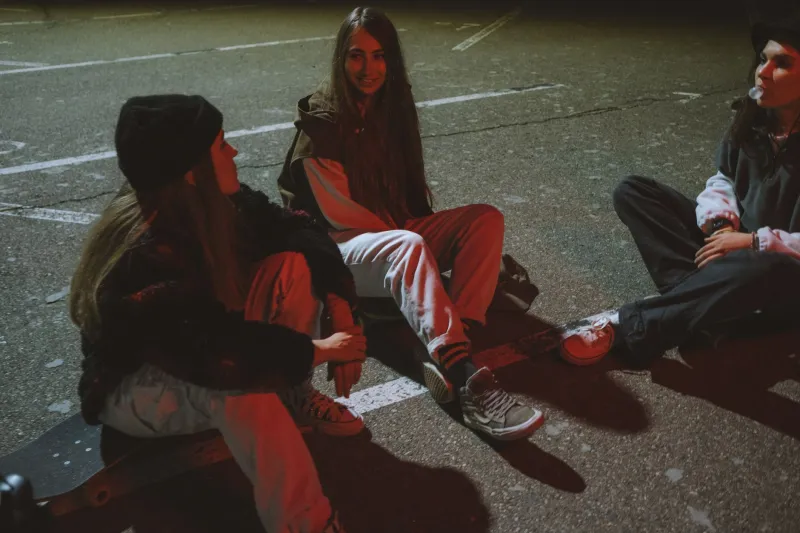
The crew doesn't need to be huge. Some of the tightest, most functional crews at spots across the country are six or eight people deep. What they share isn't a follower count — it's a patch of concrete or a section of coastline and the unspoken agreement that they're going to look out for each other and for the space they love.
The Real Flex
In a culture that's increasingly obsessed with visibility and reach, there's something genuinely radical about valuing the people who are physically present over the ones who are digitally adjacent. Your crew can't go viral. They can, however, pull you out of a bad situation, teach you something no video can, fight for the spot you both love, and make the whole experience of showing up feel like it means something.
That's not a small thing. In a lot of ways, it's the whole thing.
So yeah — grow your audience if that's your move. Post the clips, build the brand, do what you do. But don't confuse any of that for community. Your real crew is the one that shows up in the parking lot at dawn, reads the conditions with you, and rides it out when things get heavy.
Find them. Be one of them. Hold it down.