Roots in the Concrete and Sand: How Action Sports Culture Is Fighting to Protect the Places That Made It
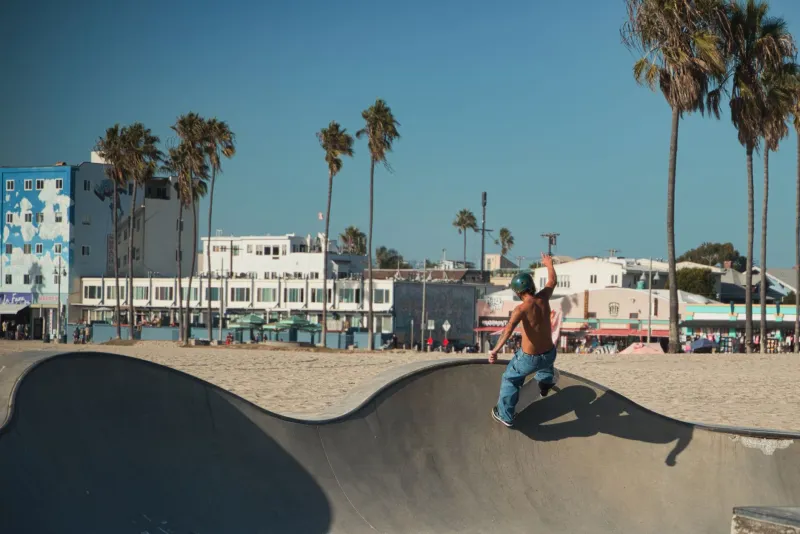
There's a crack in the sidewalk at the edge of the parking lot where you learned your first kickflip. You probably don't think about it much anymore, but it's there — the same crack, the same rough patch of asphalt, the same faded curb that scuffed your trucks for the first time. That spot didn't just teach you how to skate. It taught you who you were.
And right now, somewhere across the country, a developer is eyeing a piece of land just like it.
The relationship between action sports athletes and their environments has always been deeply personal — almost spiritual. Surfers talk about their home breaks the way people talk about family. Skaters describe their local park or plaza with a reverence that doesn't fully translate unless you've felt it yourself. But somewhere along the way, that reverence started turning into action. The culture that built its identity on showing up uninvited and doing whatever it wanted is quietly becoming one of the more passionate environmental and civic forces in American youth culture.
The Ocean Gave You Everything. What Are You Giving Back?
Spend any time in a surf community along the California coast, or the barrier islands of Florida, or the Pacific Northwest's cold-water lineups, and you'll find people who are genuinely, fiercely protective of the water they paddle out into every morning. That's not new. What is new is the organized, boots-on-the-ground effort to actually do something about it.
Groups like Surfrider Foundation — with chapters spread across every coastal state — have been running beach cleanup programs for decades, but the energy behind them has shifted. It's not just older surfers showing up with trash bags anymore. Younger groms and weekend warriors are organizing their own events, posting them to Instagram, and pulling in hundreds of volunteers who wouldn't describe themselves as environmentalists but absolutely love the ocean. The motivation isn't abstract. It's personal. Clean water means better surf. Healthy dunes mean the break stays intact. Protecting the coastline is just protecting home.
In Hawaii, where surf culture is woven into the very fabric of identity, Native Hawaiian surfers have been leading conversations about coastal development and water rights that go far beyond picking up plastic. They're connecting environmental stewardship to cultural preservation in ways that are influencing how younger surfers across the mainland think about their relationship to the land under their feet — or the water under their boards.
Skate or Save: The Fight for Urban Space
For skaters, the landscape is different — concrete instead of coastline — but the stakes feel just as real. The urban environments that define skateboarding are constantly under threat, not from pollution but from redevelopment, gentrification, and the slow erasure of the public spaces where skate culture actually lives.
In cities like Los Angeles, San Francisco, and Chicago, skate communities have shown up at city council meetings, launched petition campaigns, and organized media pressure to stop the removal of beloved spots or fight for the construction of public skateparks in neighborhoods that desperately need them. The famous LOVE Park battle in Philadelphia became a kind of national symbol of this tension — a decades-long fight between skaters and city officials over who gets to use public space and how. Skaters lost that one, eventually. But they didn't stop fighting.
In Denver, grassroots skater groups partnered with city parks departments to help design and fund new public parks that serve both skating and the broader community. In Atlanta, local crews have been involved in neighborhood revitalization projects that use skateparks as anchors for underserved areas, making the argument — successfully — that skating infrastructure is community infrastructure.
This is the shift. Skaters stopped just showing up and started showing out — at the table, in the planning meetings, in the conversations about what cities should look like.
Leaving It Better Than You Found It
There's an old outdoor ethic called Leave No Trace. The idea is simple: you pass through a place, you don't wreck it, you leave it exactly as you found it. Action sports culture is starting to build on something slightly more ambitious — leave it better than you found it.
Organizations like the Skatepark Project, formerly the Tony Hawk Foundation, have spent years channeling resources into building free, public skateparks in low-income communities across the country. The explicit philosophy is that access to a safe, well-built public space changes trajectories. Kids who have somewhere to go, something to learn, and a community around them are kids who stay out of trouble and develop real skills — physical, social, creative. The skatepark becomes an investment in the neighborhood, not just in skating.
On the surf side, programs connecting at-risk youth to the ocean — like those run by organizations in San Diego, Jacksonville, and the Jersey Shore — are pairing environmental education with surfing instruction, building a generation of young people who understand that the wave they're riding exists inside a larger ecosystem that needs protecting.
Why This Matters More Than It Used to
Climate change is making this urgent in ways that feel increasingly hard to ignore. Sea level rise is eating coastlines. Algae blooms from agricultural runoff are closing surf spots. Drought and heat are cracking skate plazas and drying up the water tables that keep beach ecosystems alive. The places that raised action sports athletes are under real, measurable pressure — and the athletes who love them are starting to connect those dots.
That's a cultural shift worth paying attention to. For a long time, action sports were framed as inherently countercultural, anti-establishment, allergic to anything that smelled like civic responsibility. And honestly, some of that energy is still there — it's part of what makes the culture feel alive. But the best version of that rebellious instinct isn't just rejecting the system. It's protecting the things the system would happily pave over or sell off if nobody pushed back.
The spot that raised you doesn't belong to a developer. It doesn't belong to a city planning committee or a real estate portfolio. It belongs to everyone who ever learned something real there — who fell down and got back up, who paddled out scared and came in stoked, who found something in that place they couldn't find anywhere else.
Fight for it like it matters. Because it does.