Stoked Without a Check: How Rogue Athletes Are Building Real Income on Their Own Terms

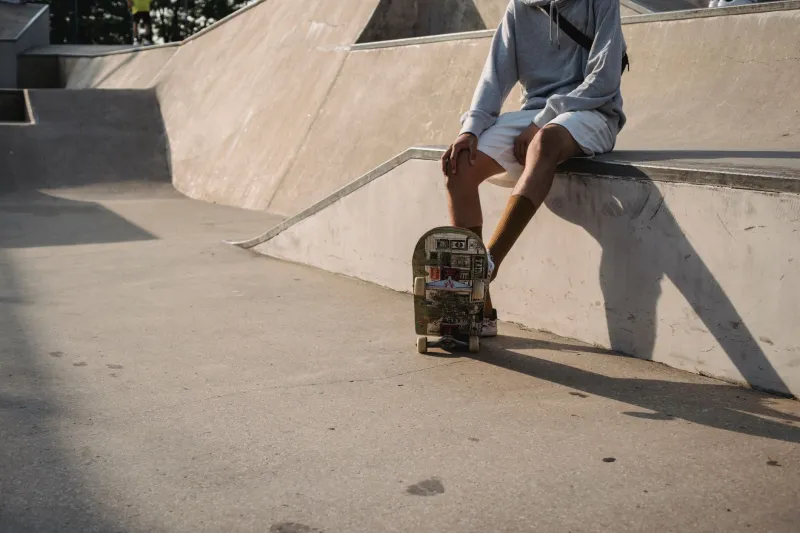
Photo by Photo by Maksim Chernishev on Unsplash on Unsplash
For decades, the dream looked the same: skate hard enough, get noticed, land a sponsor. Maybe you'd end up with a flow deal from a mid-tier brand, or if you were truly lucky, a full-on contract with your face on a deck graphic. The pipeline was narrow, the gatekeepers were real, and most athletes who didn't make the cut just... kept skating for free.
But something shifted. Quietly, then all at once.
A new generation of athletes — skaters grinding in Phoenix, surfers paddling out in North Carolina, BMX riders tearing up spots in Detroit — figured out they didn't need to wait for permission. They built their own lanes. And some of them are making more money, with more creative control, than their sponsored peers.
The Old Model Is Cracking
Traditional sponsorship in action sports has always been a pyramid with brutal odds. A brand signs a handful of elite riders, pays them a salary or a flow of free product, and gets content and visibility in return. It worked — for the brands, and for the lucky few at the top.
But the system left a massive middle class of talented athletes completely out in the cold. Good enough to draw crowds at local spots. Good enough to rack up millions of views. Just not quite "marketable" enough for the corporate machine.
"I spent three years sending clips to team managers and getting nothing back," says Marcus, a 24-year-old street skater from Atlanta who asked us to use only his first name. "At some point I just stopped waiting and started treating myself like a small business."
That mindset shift — from athlete-seeking-sponsor to athlete-as-brand — is at the heart of what's happening right now.
Micro-Brands and the Grassroots Economy
One of the most visible changes is the explosion of micro-brands: small, often skater-owned companies that operate with lean budgets but serious cultural credibility. These aren't the Nikes of the world. They're five-person operations running out of garages in Oceanside or warehouse spaces in Chicago.
And they're sponsoring athletes — just differently.
Instead of a salary, micro-brand deals often look like profit-sharing arrangements, co-created product lines, or equity stakes. An athlete might help design a colorway, promote it to their audience, and take a cut of every unit sold. The dollars per deal might be smaller, but the creative ownership is real.
Surfer and content creator Dani Reyes, based out of New Smyrna Beach, Florida, has built relationships with three different micro-brands over the past two years. None of them would get her a feature in a mainstream surf mag. All of them treat her like a partner.
"They actually ask my opinion on stuff," she says. "One brand let me design an entire wetsuit line. That's never happening at a big company unless you're already famous."
Direct Fan Funding: Patreon, Subscriptions, and the New Patronage
If micro-brands are the new sponsors, platforms like Patreon, Substack, and even OnlyFans-adjacent content subscription services are the new equipment deals.
An increasing number of athletes are going directly to their audiences and asking: will you pay to see more of what I do?
The answer, surprisingly often, is yes.
Skateboarder and filmmaker Leo Tran from Portland runs a Patreon that pulls in a few thousand dollars a month from a few hundred subscribers who want unedited skate footage, behind-the-scenes content, and access to his online community. It's not life-changing money, but it covers gear, gas, and a chunk of rent.
"My subscribers are real fans," Leo explains. "They're not just watching my stuff — they're invested in it. That feels completely different from a brand relationship where you're just a marketing asset."
This model works especially well for athletes with niche appeal — someone who might not have mass-market star power but has an intensely loyal following within a specific discipline or style.
Content Monetization: YouTube, TikTok, and the Algorithm as Sponsor
It sounds almost too simple, but YouTube ad revenue, TikTok creator funds, and brand deal integrations through social media have genuinely become a primary income source for a subset of action sports athletes.
The math isn't glamorous at the low end — a few hundred bucks a month from ad revenue alone won't pay rent in any major city. But athletes who treat content creation as seriously as their actual sport are finding that the two reinforce each other.
More clips mean more visibility. More visibility means more followers. More followers mean better rates when a brand does come knocking — on the athlete's terms this time.
"I turned down two deals last year because the brands wanted too much control over what I post," says Marcus. "Two years ago I would've said yes to anything. Now I can afford to wait for the right fit."
Collective Power: Athlete-Run Crews and Collectives
Some athletes are going even further, banding together to form collectives — groups of riders who share resources, pool audiences, and approach brands as a unit rather than as individuals.
Think of it as a union for underground athletes. One collective in Los Angeles combines a skater, a surfer, a BMX rider, and a photographer under a single umbrella brand. They pitch to sponsors together, split revenue, and cross-promote each other's content constantly.
"We're stronger together," says one of the collective's founders. "A brand that wants access to all four of our audiences has to deal with all four of us. We don't let them split us up and lowball individuals."
This kind of collective bargaining power is genuinely new in action sports culture, which has historically been fiercely individualistic.
Keeping It Real
None of this is without tension. The line between authentic hustle and shameless sellout can blur fast, especially when follower counts and algorithm pressure enter the picture.
The athletes who seem to be navigating it best share a common thread: they know what they won't do. They have a list — sometimes literal, sometimes just internal — of compromises they won't make. Brands they won't touch. Content they won't create. Spots they won't disrespect for a sponsored post.
"The second you lose credibility in this world, it's gone," Dani says flatly. "Your real audience can smell it immediately. So I protect that harder than any deal."
That instinct — to treat credibility as the actual asset, not the follower count or the paycheck — might be the defining characteristic of the new underground economy in action sports.
The stoke, it turns out, is the product. Protect it, and everything else follows.